We use cookies to provide you with a better experience and ads personalisation. Learn more in our Privacy Policy.
Insights
BS 9999:2017: What you need to know
May 7, 2026
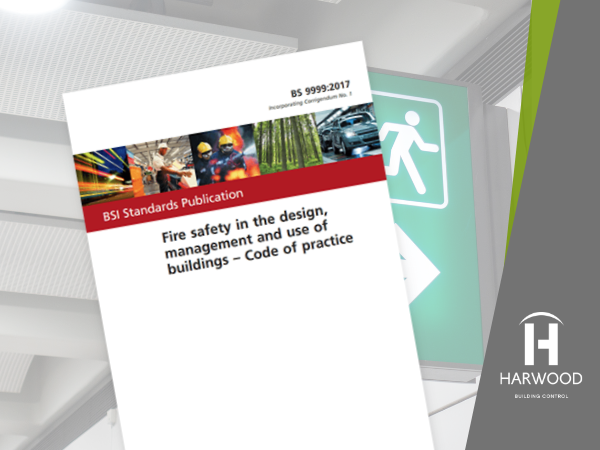
Fire strategy decisions made early in a project can significantly influence layout efficiency, buildability, programme risk and compliance. Where a straightforward prescriptive route, such as Approved Document B (ADB), imposes constraints, BS 9999 provides a flexible, risk-based code of practice for fire safety in the design, management and use of buildings, offering a more considered way forward.
This article outlines what BS 9999 covers, where it sits within the wider fire safety framework, and when it should be considered during the design process.
What is BS 9999?
BS 9999 is the British Standard for fire safety in the design, management and use of non-residential buildings, as well as mixed-use buildings where non-residential uses are involved. It does not replace the Building Regulations but instead provides a more sophisticated route to demonstrating compliance where building form, occupancy, operational use, or design ambition make a purely prescriptive approach difficult, restrictive, or inefficient. It applies to new buildings, extensions, refurbishments, changes of use and existing buildings under review.
Its purpose is to help project teams achieve appropriate standards of fire safety through a structured, risk-based approach that considers four key areas together:
- means of escape
- structural fire protection
- access and facilities for firefighting
- fire safety management
This holistic approach is what sets BS 9999 apart. Rather than treating travel distances, stairs, alarms and compartmentation as isolated design checks, BS 9999 considers how these measures interact across the building as a whole.
This is particularly valuable on projects where occupancy type, building use, operational management or layout complexity create constraints that standard guidance cannot easily accommodate.
Where it sits in the fire safety framework
One of the most common sources of confusion in fire strategy is the relationship between Requirement B, Approved Document B and BS 9999. They are related, but they are not interchangeable:
- Requirement B is the legal requirement under the Building Regulations relating to fire safety.
- Approved Document B (ADB) provides the standard prescriptive route for demonstrating compliance with Part B. BS 9999 provides an alternative, risk-based approach to demonstrating compliance with Part B where a more flexible route is appropriate.
- BS 9999 sits between the standard prescriptive route and full fire engineering in practical terms, offering greater flexibility than ADB without requiring the level of analysis typically associated with a fully fire-engineered solution.
- BS 9991 applies to residential buildings. Where residential and non-residential uses are combined within a mixed-use scheme, BS 9999 and BS 9991 may both apply. In these cases, the interface between the two standards requires careful coordination, particularly where shared spaces, access routes or fire strategy dependencies exist.
- BS 7974 provides the framework for fire engineering where a fully engineered solution is required.
This makes BS 9999 particularly useful where standard guidance can be met in principle, but the project would benefit from a more refined and commercially efficient approach.
The three levels of fire safety design
BS 9999 is built on the principle that fire safety design should reflect both the complexity of the building and the level of flexibility required.
To support this, fire safety guidance in the UK is generally considered across three levels.
- General Approach
This is the standard prescriptive route used for the majority of projects and is typically based on compliance with ADB requirements. For straightforward buildings, this is often the most efficient route to demonstrating compliance.
- Advanced Approach
This is the level for which BS 9999 is intended. It provides a more flexible, risk-based approach that allows project teams to respond to the specific characteristics of the building, its occupants and its intended use.
- Fire Safety Engineering
This is the most advanced route and is typically used on large, complex or highly unusual buildings where neither ADB nor BS 9999 can adequately address the fire strategy. This approach is generally undertaken in accordance with BS 7974 and involves detailed engineering analysis.
What makes it different?
The key difference between BS 9999 and ADB is that BS 9999 allows fire strategy decisions to respond to risk rather than relying solely on fixed prescriptive limits, offering flexibility through structured and justified trade-offs within the standard’s parameters.
For example, BS 9999 may allow variation in travel distances, exit widths, stair widths, compartmentation and evacuation strategy, but only where those changes are supported by other fire safety measures such as automatic fire detection, voice alarm systems, sprinklers, smoke control, enhanced fire safety management and reduced fire growth risk.
It is important to understand the distinction between the two approaches. BS 9999 does not relax compliance requirements; instead, it provides a structured framework for achieving and demonstrating robust fire safety compliance.
While BS 9999 can offer greater flexibility than ADB, it should not be viewed as an easier route to compliance. In many cases, it can be more onerous, as any design flexibility must be supported by stronger justification, additional fire protection measures and more robust management assumptions.
A key aspect of BS 9999 is its emphasis on fire safety management. Unlike more prescriptive guidance, it requires project teams to consider how fire safety measures will be maintained, operated and adapted over time, not simply how they are designed at completion.
Risk profiles and why they matter
At its core, BS 9999 is based on risk profiling. Rather than applying a single set of fixed rules across all building types, BS 9999 assesses fire safety requirements based on how a building is actually used, who uses it and how fire is likely to behave within it.
This assessment takes into account factors such as occupancy characteristics, likely fire growth rate, how familiar occupants are with the building, how they are likely to respond in an emergency and the overall use of the space. Together, these factors establish a risk profile that shapes the wider fire strategy.
That risk profile directly influences the design approach to means of escape, travel distances, stair and exit widths, alarm systems, compartmentation and evacuation strategy. This risk-based approach allows core fire strategy decisions to respond more closely to the realities of building use and occupant behaviour.
It also highlights why early coordination of fire strategy is so important. Decisions made at the outset regarding occupancy, layout, suppression systems and operational management can influence the flexibility available later in the design process.
Where it adds value
BS 9999 is particularly useful where standard prescriptive guidance, such as ADB, begins to constrain design efficiency, coordination, or commercial viability.
This is often the case on commercial office developments, mixed-use schemes, retail and leisure environments, large fit-out projects and buildings with atria or complex open-plan circulation. It is also particularly useful on refurbishment and change-of-use projects, where existing constraints can make a straightforward ADB route difficult to achieve efficiently.
In these scenarios, BS 9999 can help unlock more efficient layouts, reduce unnecessary design inefficiencies and support a more coordinated fire strategy.
What this means for project teams
Used well, BS 9999 can support better alignment between disciplines, more efficient floorplates and circulation, reduced redesign risk and earlier identification of fire strategy constraints. It gives project teams greater scope to make informed design decisions where a purely prescriptive approach may impose unnecessary limitations.
That flexibility, however, increases the importance of clear design team integration. Where BS 9999 is being used, assumptions need to be clearly justified, documented and aligned across the wider project team. Without that alignment, the benefits can be quickly lost, and approval, programme and delivery risks can increase.
When should it be considered?
BS 9999 should be considered as early as possible, ideally at the concept or developed design stage.
It is most effective where travel distances are becoming restrictive, core layouts are under pressure, standard guidance is creating inefficiencies, or the building is mixed-use, operationally complex or constrained by refurbishment or change-of-use. It should also be considered where phased or progressive evacuation is likely to form part of the strategy.
The earlier the correct fire strategy approach is considered, the greater the opportunity to use it effectively and avoid costly redesign later in the project.
Harwood’s fire safety experience
Harwood has supported fire safety and building control compliance across a range of complex schemes, including Natex, Norton Street in Liverpool, Barretts Redevelopment in Canterbury and Royal Sands in Ramsgate.
If there are any aspects of fire safety compliance you would like to understand better, or if you have a project you would like support with, get in touch with our team.