We use cookies to provide you with a better experience and ads personalisation. Learn more in our Privacy Policy.
Insights
BS 9991:2024: What you need to know
June 23, 2026
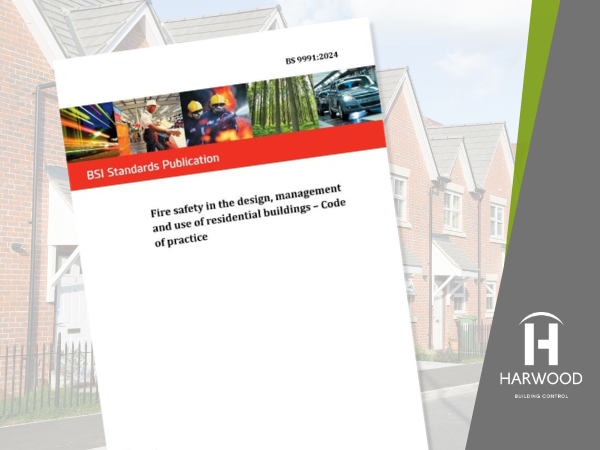
Fire strategy decisions taken at the start of a project can have a major impact on layout efficiency, buildability, programme risk, and regulatory compliance. While a prescriptive approach, such as Approved Document B (ADB), provides clear rules, BS 9991:2024 offers a flexible framework for fire safety in residential buildings and care homes, helping teams take a more considered approach to design, management, and ongoing use.
For those working on commercial or mixed-use projects, our article on BS 9999 explains an alternative approach to Part B compliance for non-residential buildings.
This article outlines what BS 9991 covers, where it fits within the wider fire safety framework, what sets it apart from other guidance, and how project teams can use it effectively.
What is BS 9991?
BS 9991 is the British Standard code of practice for fire safety in the design, management, and use of residential buildings, including care homes. It applies to new builds, extensions, refurbishments, and existing buildings under review. The standard is intended to help project teams achieve appropriate fire safety standards through a structured approach that considers key areas such as means of escape, structural fire protection, access and firefighting facilities, and fire safety management.
As a code of practice, BS 9991 remains prescriptive guidance, but it treats these elements holistically, considering how measures interact across the building as a whole. This is particularly valuable where occupancy type, layout complexity, or operational management create constraints that standard guidance cannot easily accommodate.
The latest version, BS 9991:2024, fully supersedes BS 9991:2015. It introduces significant safety improvements aligned with UK building regulations. Residential care homes are now explicitly covered under Section 10, which mandates robust sprinkler systems and detailed frameworks for progressive horizontal evacuation.
Where it sits in the fire safety framework
Understanding where BS 9991 fits within the wider regulatory hierarchy is important. Requirement B is the legal obligation under the Building Regulations relating to fire safety.
Approved Document B (ADB) provides the standard prescriptive route for demonstrating compliance with Part B. BS 9991 provides alternative prescriptive guidance for residential buildings, giving project teams greater flexibility to achieve safe, resilient designs without the full level of analysis associated with full fire engineering under BS 7974.
Where residential and non-residential uses are combined within a mixed-use scheme, both BS 9991 and BS 9999 may apply. In these cases, careful coordination is required where shared spaces, escape routes, or other fire strategy dependencies intersect. When applied correctly, BS 9991 complements prescriptive guidance and helps deliver a practical, comprehensive fire strategy across residential developments and care homes.
What makes it different?
BS 9991 differs from ADB in its approach to fire safety design. While ADB provides prescriptive limits, BS 9991 offers a more flexible prescriptive framework that allows designers to adopt a considered approach where building use, occupancy, or layout creates constraints. Key features include:
- Explicit guidance for care homes, including progressive horizontal evacuation and sprinkler coverage regardless of building height.
- Holistic treatment of means of escape, compartmentation, and access for firefighting.
- Guidance on escape route design, stair widths, lobbies, and lift arrangements to ensure safe evacuation.
- Integration of active and passive fire protection measures, such as sprinklers, smoke control, and fire-resisting construction.
BS 9991 does not relax compliance requirements; it provides prescriptive structured guidance to help achieve safe and practical designs while meeting regulatory expectations.
Where it adds value
BS 9991 helps project teams overcome constraints imposed by prescriptive guidance, creating safer and more practical layouts. It supports interdisciplinary coordination, facilitates robust integration of fire strategies, and ensures that care homes and other residential buildings benefit from clear guidance on evacuation, sprinkler systems, and fire protection.
The standard is especially valuable on complex residential projects, care homes, or refurbishment schemes of standard or moderate complexity, where ADB alone may not provide sufficient flexibility or clarity. For more complex buildings, project teams will generally revert to a fire-engineered solution rather than BS 9991.
What this means for project teams
Project teams using BS 9991 can align disciplines more effectively, reduce the risk of redesign, and make informed decisions where prescriptive guidance may be limiting. Early integration is critical: assumptions, justifications, and strategies should be clearly documented and coordinated across the project team. Applied well, BS 9991 helps improve safety, efficiency, and compliance throughout the building lifecycle.
Harwood’s fire safety experience
Harwood has supported numerous residential and care home projects of varying complexity to ensure regulatory compliance. See some of our most recent work by visiting our Projects page.
If there are any aspects of fire safety compliance you would like to understand better, or if you have a residential or care home project you would like support with, get in touch with our team.